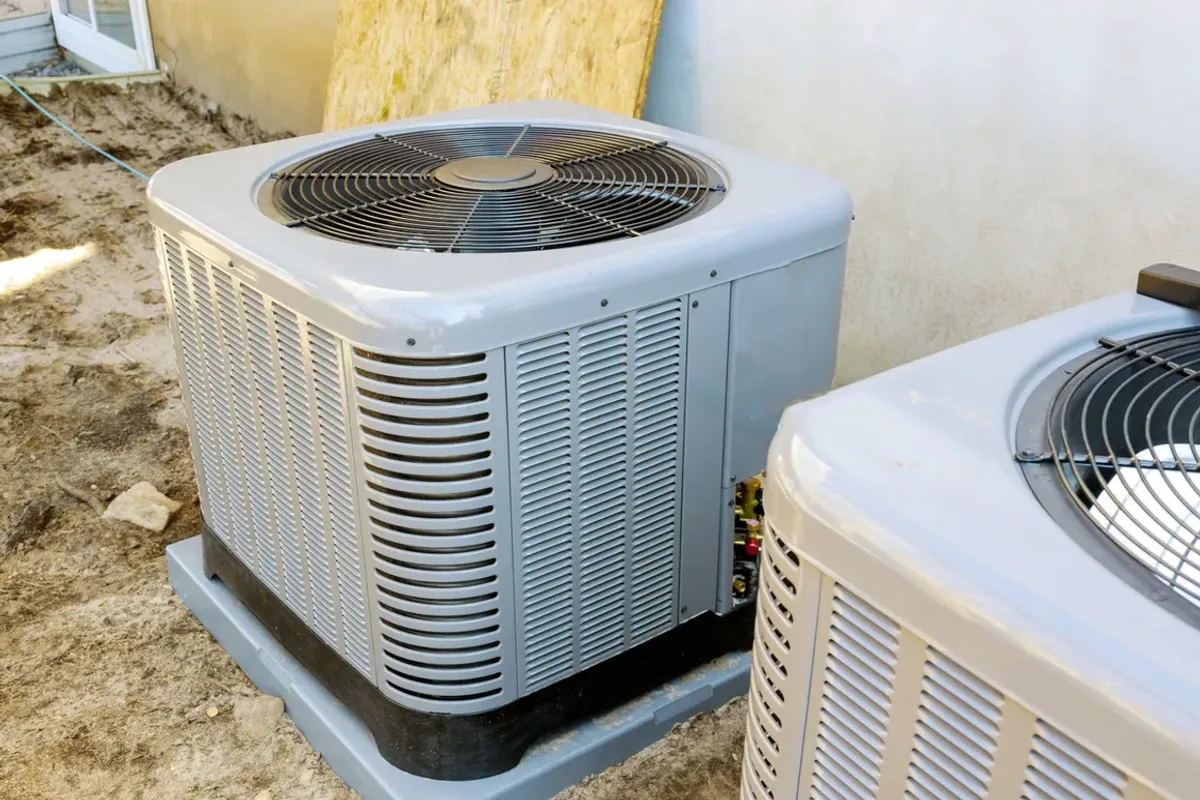
Is the system blowing warm air, failing to start, making an unusual sound, or leaving water near an indoor unit?
Warm air, an indoor unit that drips, or a fan that grinds can arise from distinct air-conditioning faults. Diagnosis should first identify whether the property has central air or a ductless mini-split, since the equipment layout and controls differ. Inspection findings about airflow, coils, drainage, electrical components, and the refrigerant circuit help define the repair. If a major component is failing or problems recur, compare repair with replacement using the unit's condition and service history.
The model, system type, displayed fault information, and timing of the symptom help focus an assessment. A central system and a ductless system have different indoor equipment and airflow arrangements. Inspection may compare the fan and airflow, coil condition, condensate drainage, controls, and refrigerant-circuit findings. A repair decision should follow the diagnosed fault; replacement is a separate option when condition, repeated repairs, or parts availability change the comparison.
Central air and ductless mini-split cooling faults
Airflow, coil, fan, control, and condensate problems
Refrigerant-circuit diagnosis and repair-versus-replacement decisions
Assessment and Scope
Questions for the Proposed Work
01
Distinguish cooling faults from airflow and drainage problems
Warm air does not by itself identify a failed part. The assessment should establish whether the indoor fan is operating, whether airflow is obstructed, and whether the coil and condensate path show a problem. Water near an indoor unit makes drainage observations especially relevant, while a grinding sound may point attention toward a moving component. Refrigerant-circuit inspection is a separate technical task and should be performed by a qualified professional, not attempted by an occupant.
02
Compare repair and replacement using the unit's condition
A repair may be reasonable when a specific fault is identified and the remaining equipment condition supports continued service. A replacement comparison becomes more relevant when major components are compromised, faults keep returning, or suitable parts are unavailable. The assessment should identify the failed component and explain how it affects operation before either path is chosen. For an older central system or an inverter-driven ductless unit, equipment configuration and compatibility can affect the scope.
03
Let inspection findings set maintenance work
Maintenance is distinct from repairing an active fault and should be guided by the manufacturer's instructions and observed condition. Depending on the system, an inspection may consider airflow, coil condition, thermostat response, electrical components, and condensate drainage. For central air, the duct and return-air arrangement can matter to airflow; for ductless equipment, inspect the indoor unit and its drainage path. Refrigerant checks belong to qualified service work and are not a routine occupant task.
Compare the next step
Ask whether the cooling assessment uses the old building conditions or the planned finished envelope. Window specifications, shading, and insulation can change room heat gain. A replacement proposal should state its design assumptions and explain humidity control as well as its ability to lower the thermostat temperature.
Do not open electrical panels or handle refrigerant. If ice, water near electrical equipment, or abnormal operation is present, stop using the affected system and request an assessment.